https://johannsebastianbach.bluemusicgroup.com

 Relaxing Classical Piano...
 Sommarsånger & Psalmer ur...
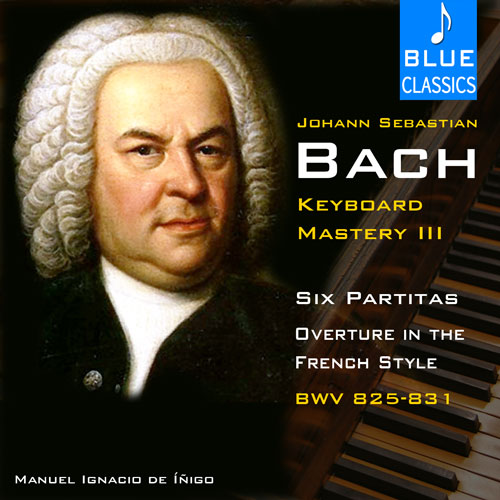 Bach Keyboard Mastery III: Six...
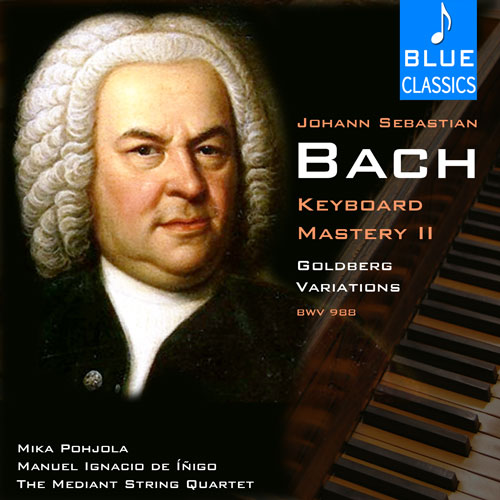 Bach Keyboard Mastery II:...
 Bach Keyboard Mastery I:...
 Musical Treasures for the Organ
 Bach Organ Works II
 Bach Organ Works I
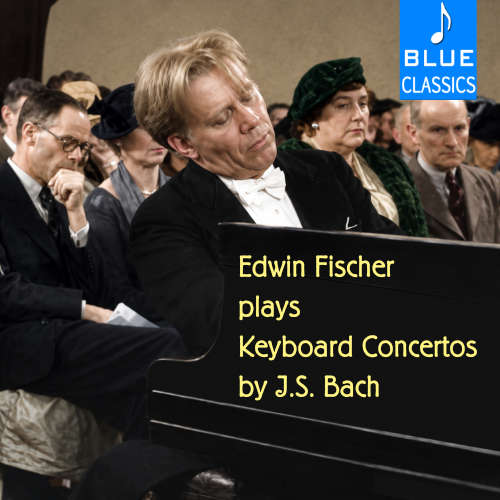 Edwin Fischer Plays Keyboard...

Johann Sebastian Bach - composer
Johann Sebastian Bach (b. 21 March 1685, Eisenach – d. 28 July 1750, Leipzig) is often cited as the most significant composer of modern music. His position as the premier composer of the Baroque era is undisputed. Bach's life and career were confined to a very limited geographical space. Born and raised in Thuringia, he never went farther north than Hamburg and Lübeck, or farther south than Carlsbad. In a similarly confined way, his east-west range stretched from Dresden (east) to Kassel (west).Bach was a composer, organist, harpsichordist, violist, and violinist whose ecclesiastical and secular works for choir, orchestra, and solo instruments drew together the strands of the Baroque period and brought it to its ultimate maturity. Although he did not introduce new forms, he enriched the prevailing German style with a robust contrapuntal technique, an unrivalled control of harmonic and motivic organisation, and the adaptation of rhythms, forms and textures from abroad, particularly from Italy and France.
Revered for their intellectual depth, technical command and artistic beauty, Bach's works include the Brandenburg concertos, the Goldberg Variations, the Partitas, The Well-Tempered Clavier, the Mass in B Minor, the St Matthew Passion, the St John Passion, the Magnificat, The Musical Offering, The Art of Fugue, the English and French Suites, the Sonatas and Partitas for solo violin, the Cello Suites, more than 200 surviving cantatas, and a similar number of organ works, including the celebrated Toccata and Fugue in D minor and Passacaglia and Fugue in C minor.
Bach's abilities as an organist were highly respected throughout Europe during his lifetime, although he was not widely recognised as a great composer until a revival of interest and performances of his music in the first half of the 19th century. He is now regarded as the supreme composer of the Baroque, and as one of the greatest of all time.